
Last week, AFSA, along with other associations, signed a letter supporting the reconciliation bill in the U.S. House. This legislation builds on the 2017 Tax Cuts and Jobs Act by extending and strengthening key provisions that fuel the Main Street business community.
The bill enhances and solidifies three cornerstone provisions for pass-through businesses: the lower individual tax rates, the Section 199A pass-through deduction, and the higher estate tax exemptions. These measures provide long-term certainty, helping small and family-owned businesses reinvest, grow, and plan across generations without facing punishing tax burdens. The bill also restores immediate expensing for R&D, 100% bonus depreciation, and a higher cap on interest deductions—making it easier for businesses to invest in innovation and expansion.
AFSA and the other signing associations applaud the House for crafting a pro-growth tax package that adheres to fiscal responsibility. This legislation proves it is possible to support job creators and uphold budget discipline—a clear win for Main Street businesses and the broader U.S. economy.
AFSA Supports Reconciliation
May 30, 2025
Last week, AFSA, along with other associations, signed a letter supporting the reconciliation bill in the U.S. House. This legislation builds on the 2017 Tax Cuts and Jobs Act by extending and strengthening key provisions that fuel … Read the rest
AFSA Continues to Oppose Rate Caps
May 30, 2025
Last week, AFSA, along with other associations, signed a letter to U.S. Senate leadership opposing Amendment 2239 to S. 1582, which proposes an all-in annual percentage rate (APR) cap of 10% for credit cards. While this amendment claims … Read the rest
AFSA Expresses Concerns with Oregon’s Medical Debt Bill
May 27, 2025
AFSA’s State Government Affairs team submitted a comment letter to the Oregon House Committee on Behavioral Health and Health Care regarding SB 605, a bill that would significantly amend Oregon’s existing medical debt collection statutes.… Read the rest
AFSA Supports Remote Notarization
Apr 02, 2025
This week AFSA and other financial trade groups signed on to a letter in support of H.R.1777, the “Securing and Enabling Commerce Using Remote and Electronic (SECURE) Notarization Act.”
Introduced by Reps. Cliff Bentz (R-OR)… Read the rest
Women’s History Month | Corinne Kirkendall
Mar 13, 2025
AFSA is celebrating Women’s History Month by featuring outstanding female leaders in the consumer credit industry.

Women’s History Month | Kelly Lipinski
Mar 11, 2025
AFSA is celebrating Women’s History Month by featuring outstanding female leaders in the consumer credit industry.
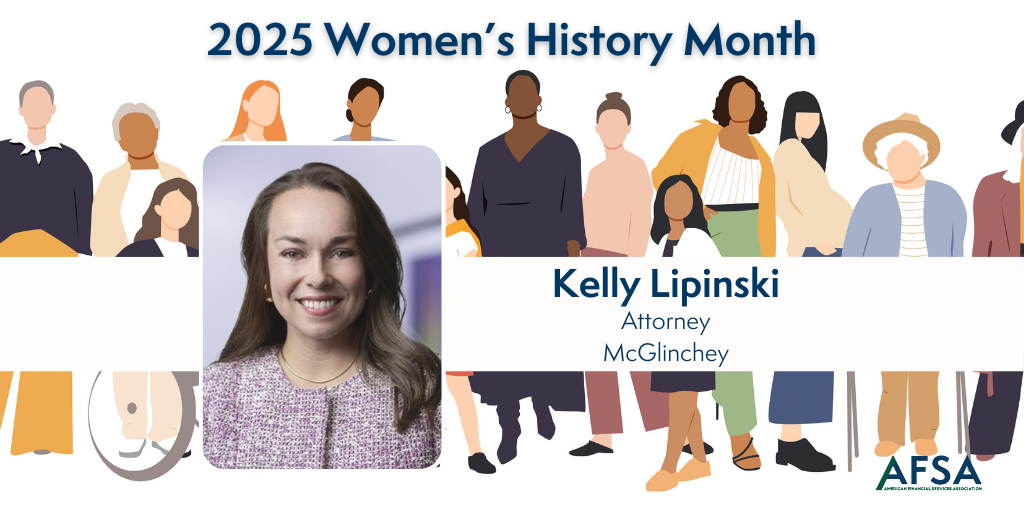
What has been the most important lesson?
So many legal and business issues are complicated and nuance is important, so
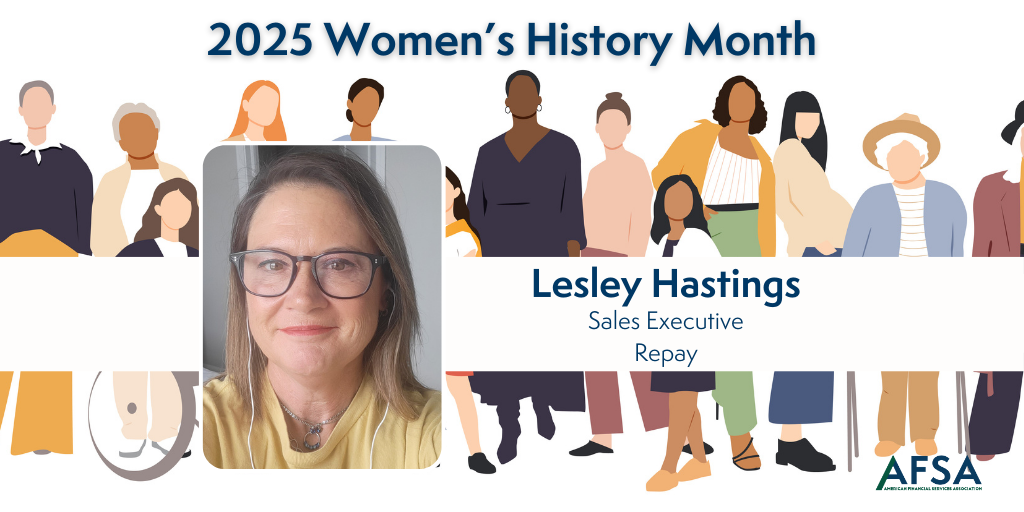
Women’s History Month | Lesley Hastings
Mar 11, 2025
AFSA is celebrating Women’s History Month by featuring outstanding female leaders in the consumer credit industry.
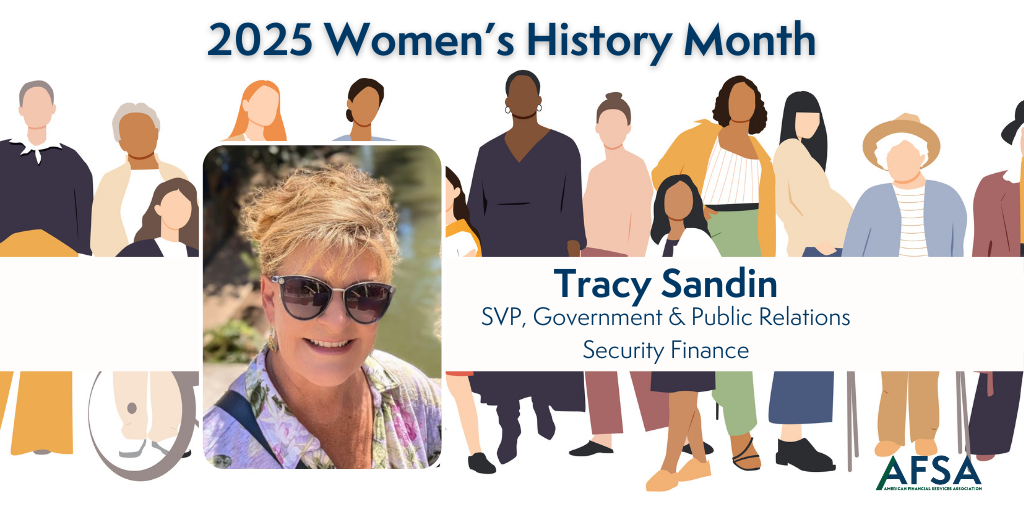
Women’s History Month | Tracy Sandin
Mar 11, 2025
AFSA is celebrating Women’s History Month by featuring outstanding female leaders in the consumer credit industry.
What has been the most important lesson?
In 1997, I earned my first major promotion after single-handedly defeating a
New Day, New CFPB Leadership
Feb 08, 2025
On Friday evening, a day after Russell Vought was confirmed as Director of the Office of Management and Budget, President Trump named him acting director of the Consumer Financial Protection Bureau.
AFSA congratulates Director Vought on… Read the rest
Change Comes to the CFPB
Feb 03, 2025
Today, President Trump announced that on January 31 he appointed Secretary of the Treasury Scott Bessent as acting director of the CFPB. As one of his first actions as acting director, Secretary Bessent ordered that the CFPB will:
- halt movement