Sarah Bloom Raskin is one of the distinguished leaders of the financial services sector, having served as Deputy Treasury Secretary under President Obama from March of 2014 until January of 2017, as the highest-ranking woman in Treasury Department history. She served as a Federal Reserve Board Governor from 2010 to 2014, where she helped steward the American economy through one of the most challenging economic periods of the past century.
She also served the Commissioner of Financial Regulation for the state of Maryland from 2007-2010. While there, she led an agency responsible for regulating Maryland’s financial institutions and protecting all Marylanders from bad actors in the financial services industry.
Before her time as commissioner, she held a variety of legal and regulatory positions with the Promontory Financial Group (Managing Director), the WorldWide Retail Exchange (General Counsel), and the Columbia Energy Services Corporation (General Counsel). Earlier in her career she served as Banking Counsel for the United States Senate Committee on Banking, Housing, and Urban Affairs.
Now, Raskin is applying these decades of experience to the fast-evolving world of cybersecurity. Within the United States and throughout the international community, Raskin has been a champion of cybersecurity in the financial sector, helping to elevate this critical issue to C-suites and boardrooms. She leads the development of the G-7 Fundamental Elements of Cybersecurity pertaining to the Financial Sector, which contributed to a more secure and resilient system in the face of threats that are escalating in frequency, severity and sophistication.
Sarah Bloom Raskin’s session at the 2019 AFSA Annual Meeting is going to be a must-attend event. The session will be structured as an exclusive question and answer session with one of our nation’s preeminent minds on financial regulation and cybersecurity policy.
More information is available at annual.afsaonline.org.
AFSA Annual Meeting Hot Topic: Cybersecurity
Oct 07, 2019
Sarah Bloom Raskin is one of the distinguished leaders of the financial services sector, having served as Deputy Treasury Secretary under President Obama from March of 2014 until January of 2017, as the highest-ranking woman in Treasury … Read the rest

AFSA Welcomes CFPB Deputy Director to Annual Meeting
Oct 02, 2019
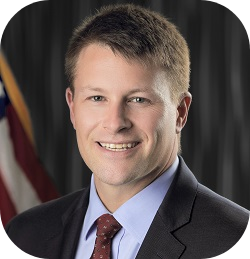 The American Financial Services Association is pleased to welcome Brian Johnson to the 2019 AFSA Annual Meeting in Nashville.
Mr.Johnson currently serves as the deputy director of the Consumer Financial Protection Bureau (CFPB). Previously,… Read the rest
Press Release | AFSA Challenges New Nevada Credit Provision
Oct 01, 2019
AFSA CHALLENGES NEW NEVADA CREDIT PROVISION
Federal preemption makes new state requirement impossible to implement
Washington – Today (October 1, 2019) the American Financial Services Association (AFSA) and other trade associations… Read the rest
AFSA SGA Publishes CCPA Whitepaper
Oct 01, 2019
AFSA's State Government Affairs team published its monthly white paper today, covering the California Consumer Privacy Act (CCPA), which becomes effective January 1, 2020. The white paper describes the current provisions of the CCPA… Read the rest
AFSA Gets Into the Weeds on NDAA, Blunt Talk on FDCPA
Sep 27, 2019
The American Financial Services Association remained heavily engaged in key issues this week, submitting a comment letter on the National Defense Authorization Act (NDAA) and attending a House Financial Services Committee (HFSC) meeting… Read the rest
AFSA Welcomes Nine New Members
Sep 26, 2019
AFSA is pleased to welcome nine new member companies to the association.
Commercial Membership
Floorplan Xpress LLC – Floorplan Xpress LLC provides inventory financing for independent automobile dealerships in 30 states.
Active… Read the rest
AFSA Supports SAFE Banking Act
Sep 26, 2019
The American Financial Services Association on September 25th submitted a letter to House Speaker Nancy Pelosi (D-CA) and Minority Leader Kevin McCarthy (R-CA) expressing its strong support for HR 1595, the bipartisan-backed Secure and… Read the rest
Fed Study Estimates 60M Can’t Get Credit
Sep 25, 2019
The New York Federal Reserve reported yesterday that as many as 60 million Americans – possibly twice the number previously estimated – struggle to qualify for credit. Unlike the “credit invisible” population… Read the rest
Minding the GAP
Sep 25, 2019
At least one of the examinations the Consumer Financial Protection Bureau (CFPB) completed in 2018 included instances in which auto lenders sold a GAP product to consumers under circumstances which the CFPB found led to an abusive practice.… Read the rest